NovaQTech Insights
Beyond the Checklist: Why Modern Third-Party Auditing Requires Professional Judgement, Communication, and Human Awareness
Third-party auditing has changed significantly. In many organizations, the audit is still viewed as a procedural event: review the documents, sample the records, complete the checklist, report the findings, and move on. But real auditing has never been that simple.
Modern auditors work inside environments shaped by organizational pressure, communication barriers, digital systems, remote work, cultural complexity, ethical expectations, customer requirements, and rapidly changing business realities. In that environment, technical knowledge remains essential, but it is no longer enough by itself.
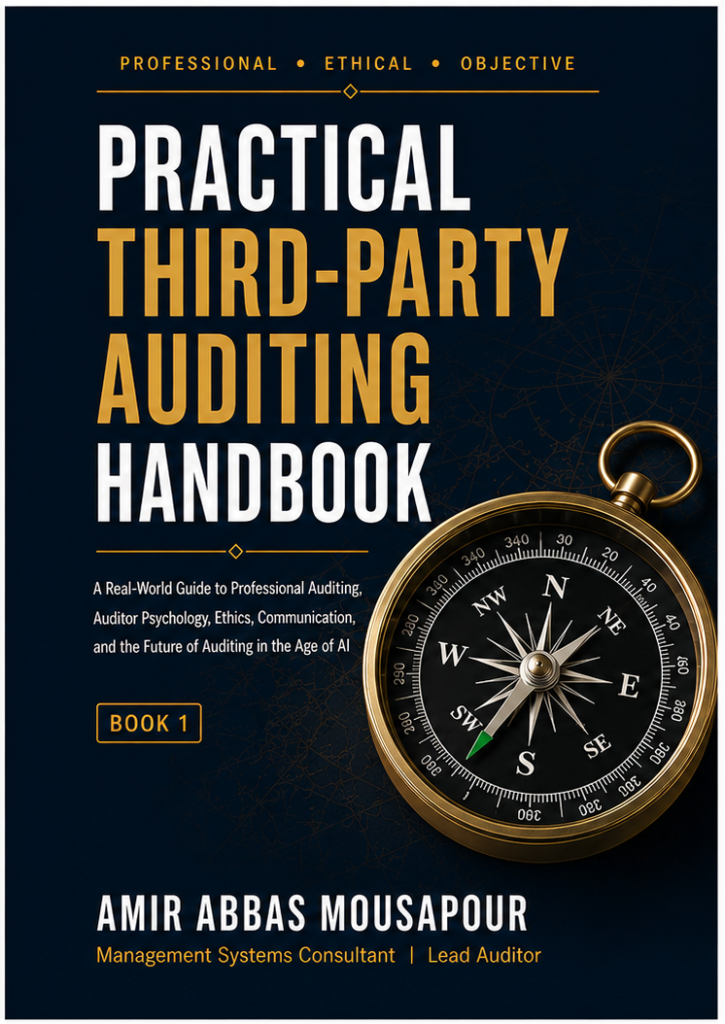
This is the central idea behind Practical Third-Party Auditing Handbook: professional auditing is not only a technical activity. It is also a human, behavioural, ethical, and judgement-based discipline.
Auditing Beyond Checklist Compliance
A checklist can help an auditor stay organized. It can remind the audit team of requirements, topics, records, and process areas that need attention. However, a checklist cannot replace professional judgement.
An auditor still needs to decide whether the evidence is sufficient, whether a situation represents an isolated issue or a systemic weakness, whether communication from the auditee is complete, and whether the audit conclusion is proportionate to the evidence collected.
In real audit situations, the most important moments often happen outside the checklist. They happen when an auditee disagrees with a finding, when evidence is incomplete, when management pressure appears, when communication becomes tense, or when the auditor must decide how strongly the facts support a conclusion.
The Human Side of Professional Auditing
Auditing involves people. It involves their decisions, habits, fears, assumptions, communication styles, and organizational culture. A professional auditor must understand that evidence does not exist in isolation. Evidence is produced, maintained, explained, protected, and sometimes misunderstood by people working under real operational pressures.
That is why auditor behaviour matters. Calm communication, fairness, independence, listening ability, emotional discipline, and professional presence can influence the quality of the entire audit process. A technically correct auditor who communicates poorly can damage trust. A polite auditor who weakens conclusions under pressure can damage audit credibility. Professional auditing requires both competence and character.
Why Opening and Closing Meetings Matter
Opening and closing meetings are often treated as formalities, but they are actually critical control points. A strong opening meeting establishes expectations, confirms the audit scope, explains the method, clarifies communication channels, and reduces confusion before the audit begins.
A strong closing meeting protects the integrity of audit conclusions. It allows the auditor to communicate findings clearly, explain evidence, manage disagreement professionally, and ensure that the organization understands the next steps. When these meetings are weak, misunderstanding and resistance often increase later in the audit process.
Evidence, Ethics, and Professional Independence
Third-party auditors must balance many expectations at the same time. They must be objective, respectful, evidence-based, proportionate, and independent. They must understand the audit criteria, but they must also recognize the limits of the evidence available to them.
Ethical pressure can appear in subtle ways. It may come through urgency, reputation concerns, commercial sensitivity, personal relationships, or disagreement about the impact of a finding. Professional auditors need the maturity to listen carefully without allowing pressure to distort the evidence-based conclusion.
Auditing in the Age of AI and Digital Transformation
The future of auditing will increasingly involve digital evidence, remote auditing, artificial intelligence, data integrity, cybersecurity, and continuous monitoring. These changes will not eliminate the need for auditors. Instead, they will raise the importance of auditor judgement.
As technology becomes more advanced, auditors will need to ask better questions: Is the data reliable? Is the system controlled? Is the evidence traceable? Are digital records complete and protected? Has automation improved assurance, or has it created new risks that are not yet understood?
Technology can support audit capability, but it cannot replace professional responsibility. The future auditor will need both technical awareness and human judgement.
About the Handbook
Practical Third-Party Auditing Handbook was written for auditors, lead auditors, certification body professionals, technical reviewers, consultants, trainers, quality managers, compliance professionals, and organizational leaders who want to understand the practical reality of auditing beyond written procedures.
The handbook covers topics such as opening and closing meetings, audit team coordination, auditor behaviour, difficult auditees, auditor psychology, confidentiality, evidence collection, ethics, time management, fatigue, communication barriers, sampling, operational limitations, mentoring, cultural neutrality, ethical dilemmas, AI, digital transformation, and real-world audit lessons.
The purpose of the book is not to replace standards, regulations, accreditation requirements, or certification body procedures. Its purpose is to strengthen the professional thinking behind the audit process.
Final Thought
Professional auditing is not created by checklists alone. It is created by evidence-based thinking, ethical discipline, communication maturity, professional independence, and the ability to understand how organizations actually work.
In that sense, the future of auditing belongs not only to auditors who know the requirements, but to auditors who can apply judgement with fairness, courage, and professional clarity.